Kees Brenninkmeyer Foundation Completes Fifteen-Year Mission
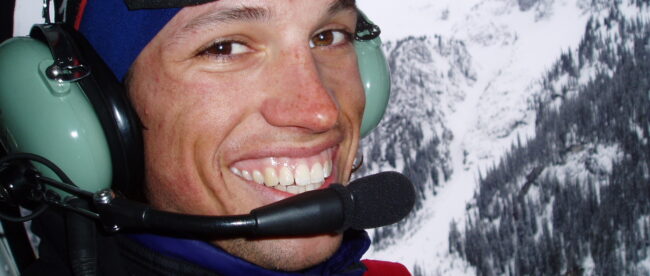
Deceased alpine guide Kees Brenninkmeyer’s legacy benefited fellow mountain professionals
by Joy Martin
“You might wake up without a foot” were the last words Rob Gowler heard before slipping into an anesthesia dream at a hospital in Mexico City in 2007. At the time, he was traveling around South America when a staph infection afflicted his ankle joint. He ignored it until it became so severe that it required medical attention.
“Back then, I was a total dirtbag climbing guide,” Gowler said. “All my mother wanted was for me to get a job with health insurance because she was so worried I’d get hurt. But I didn’t have insurance.”
One of his buddies went to school with Dr. Tom Hackett, a renowned orthopedic surgeon at the Steadman Clinic in Vail, Colorado, and introduced him to Gowler. Gowler asked Hackett if he could wait to have surgery in the States, but—according to Gowler—Hackett said, “It’s bad, dude.” So, Gowler opted for affordable surgery in Mexico, and when he woke up, the doctor said he was lucky. He kept his foot.
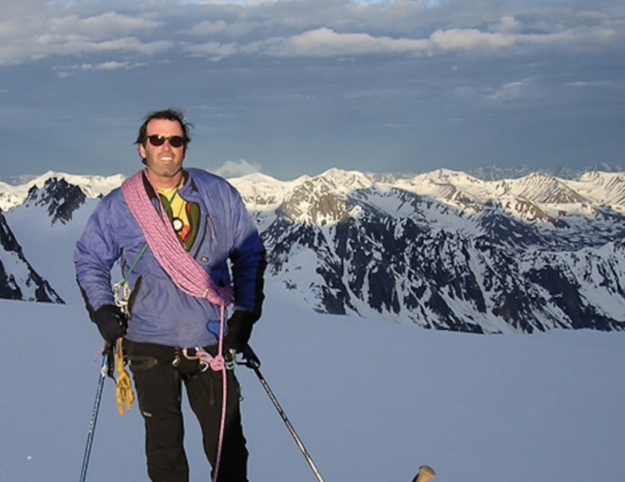
Four years later, in 2011, Gowler was guiding a climbing trip in the Tetons when he tore his MCL. He still didn’t have insurance and was thinking he’d travel to Mexico again for surgery. He called Hackett to get his opinion. Hackett had good news: a new foundation had been created for mountain professionals who needed surgery to continue their careers. Hackett encouraged Gowler to apply for a grant.
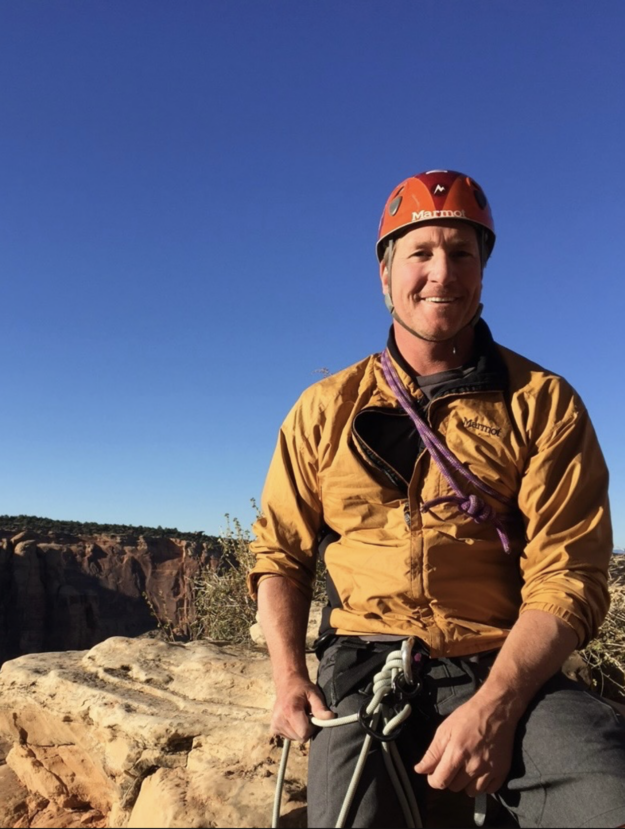
The grant was provided by the Kees Brenninkmeyer Foundation, which was established in 2011 by Hans and Suzy Brenninkmeyer in memory of their son, Kees. Cornelius “Kees” Conrad Peter Brenninkmeyer was an alpine ski and mountaineering guide. While working as a heli-ski guide in Alaska, he injured his knee and needed reconstructive surgery. He opted for surgery at the Steadman Clinic, celebrated for its record of helping athletes return to and thrive in their careers after treatment. Kees had a successful surgery and recovery and returned to work, grateful and keenly aware that many of his colleagues lacked the financial resources or medical coverage to access the same level of care he received. He shared his deep regret with his father that others with similar career goals couldn’t get the help they needed because of money. Kees knew that his privilege was the difference between keeping his job and being forced to give up his passion.
On January 4, 2007, twenty-five-year-old Kees and his girlfriend died in a mountaineering accident in the Wapta Icefields of the Canadian Rocky Mountains. Hans never forgot his son’s genuine plea to help ski and mountain guides, patrollers, and instructors access premium orthopedic care. So, in 2011, Hans and Suzy visited the Steadman Clinic and pitched the idea of setting up a foundation in Kees’s name, using Kees’s inheritance to fund surgeries and treatments for alpine industry professionals with demonstrated financial need.
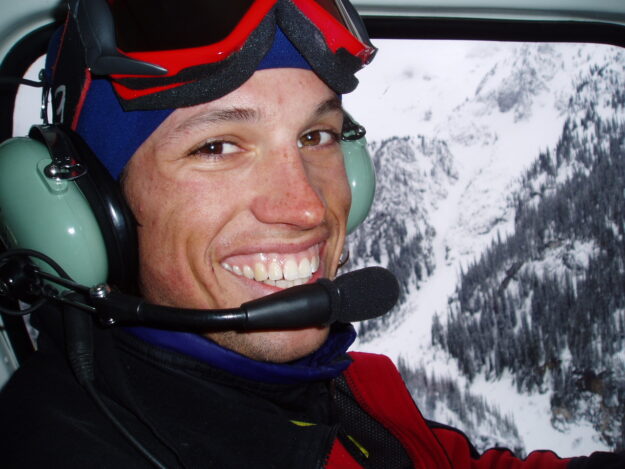
Michael Egan, Steadman’s research foundation director at the time, agreed it was a great service and had the perfect executive director in mind: Joanna Grenawalt Smith, a former barista-ski instructor who served him Americanos at the Starbucks in Vail Village.
Out of college, Smith ran a medical research lab in Denver for a couple of years, but she wanted to be closer to skiing. So, in 2009, she moved to Vail. She worked a handful of jobs, including as a barista at Starbucks, where the Steadman docs and staff got their daily jolts. They told her about a clinical research internship.
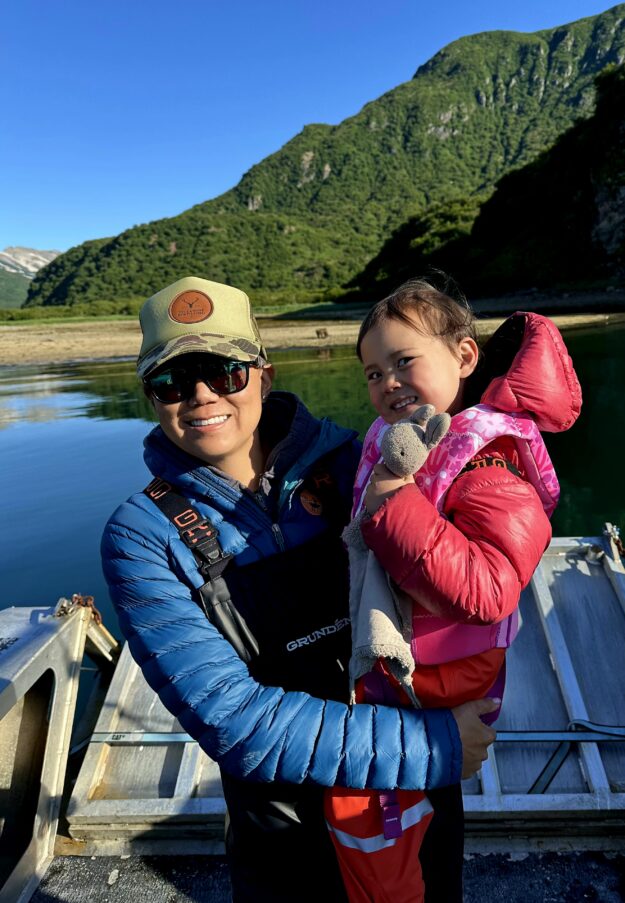
“I was already working three or four jobs, so I figured why not get another one?” she laughed.
So she applied, got the job, and conducted outcome studies. When Egan approached her about running the Kees Brenninkmeyer Foundation, she was intrigued and met with Hans. They hit it off.
“They offered me a salary that allowed me to quit two of my jobs,” Smith said. “I had never worked in nonprofits before, but Hans took a leap of faith with me. I like to say that Starbucks started my career…just talking to people.”
The KBF received nonprofit status, and since it didn’t need to raise money, it began accepting applications on April 1, 2011. The typical process was for someone to meet with a doctor, determine whether they needed surgery, and then apply for funding.
“The first year, we were just figuring it out,” Smith explained. “We knew the mission, but we didn’t know what kind of candidates we’d get. Everyone had a different story, but they were all brought together by their passion for the mountains. By the second year, we realized we had a lot of applications for emergency surgeries that weren’t realistic given the timeline. So we made it even easier.”
As executive director, Smith’s main job was to review grant applications and meet with potential recipients to see what they needed and how KBF could help. All applications, mostly from ski patrollers and guides, required at least one recommendation. One application received six recommendations, including top names in the ski industry, such as Chris Davenport, Jeremy Jones, and Jimmy Chin. Smith called the applicant to share the good news that they were happy to pay for his surgery.
Gowler answered the phone and was overwhelmed by Smith’s invitation on behalf of KBF. He got surgery from Hackett, and the grant also covered his physical therapy sessions.
“This was pre-Obamacare, so most people [in the industry] couldn’t afford health insurance,” Gowler said. “If it weren’t for the Brenninkmeyers, I wouldn’t have been able to keep doing what I’m doing now. They made it possible for people like me to do what we’re meant to do. It’s hard to emphasize how amazing that is.”
The KBF had a pie chart showing how grant recipients learned about it, with the American Mountain Guide Association and Ski Magazine featuring prominently.
“Apparently, I had a whole pie of the chart because I sent so many friends of mine who needed surgery their way. I had my own funnel,” Gowler said. “Without that grant, they might not have gotten the surgery they needed.”
Besides connecting candidates with funding for their surgeries, Smith also connected them with local partners in the Vail Valley. From housing to rides for physical therapy, people were ready to help.
“There’s something about these mountain communities,” said Julie Brenninkmeyer, Kees’s sister. “The community wanted to help beyond giving money. They filled the needs where they could.”
The other part of Smith’s job was handling bills from each surgery. She noted the sticker shock of each one, with medical center fees ranging from $30,000 to $40,000, surgeon fees around $20,000, and things like anesthesia and medical equipment billed separately. In contrast, grant recipients based in Canada or the U.K. pay a flat rate for these services—sometimes as low as $8,000—that includes everything, from surgeries to hospital stays and physical therapy.
“It’s just one clean payment,” she said. “Here [in the U.S.] we’re always waiting for these different claims. I see bills for these non-insured surgeries and think, how the heck do people pay this? No one could ever pay what the surgery costs. These mountain guides are self-insured, and there’s no workers’ compensation. There’s a gap.”
In mountain professions, injuries aren’t a matter of if, but when. When they do suffer an injury requiring surgery, the questions pound in the background: How am I going to pay for treatment? Do I pay my mortgage? Do I ask my family for loans? What do I have to do to pull this off?
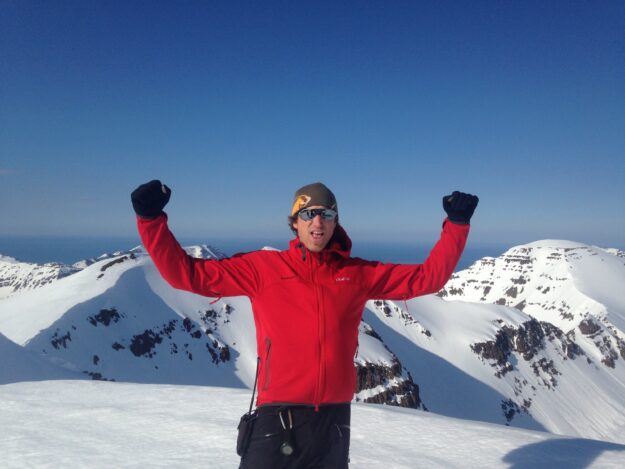
In 2014, Steve Banks, IFMGA-certified alpine ski and mountaineering guide, had a freak accident on a day off when a five-gallon glass water cooler exploded in his hands, severing nerves, tendons, and arteries in his right hand. He was in Los Angeles at the time and had surgery with a renowned plastic surgeon in Beverly Hills before flying home to Crested Butte to start physical therapy. The injury occurred in July, and Banks was determined to return to guiding in Iceland by April.
“We never think about how important our hands are,” he said. “I felt like I could hold a ski pole, but I had a claw for eight months. I didn’t know if climbing would be a thing ever again.”
He couldn’t afford good health insurance and needed disability insurance to help cover wages lost from his time off work. He also needed a second surgery. He learned about the Kees Brenninkmeyer Foundation through a random AMGA Facebook post.
“That’s a difficult spot for me, to ask for help, much less financial help,” Banks said. “But the Foundation was overly generous. They were there to help me with zero attachments. There was no question of whether I deserved the grant. They gave me money to pay my healthcare and life bills and get through that challenging time. Having that cash flow was incredible. Joanna kept asking, ‘How can we best help you? What do you need?’ They had my back. They picked up the things insurance wasn’t covering, like physical therapy.”
Banks connected with a physical therapist and hand specialist in Crested Butte named Jodi, who worked with the boxer Floyd Mayweather. She was also a climber, so she understood Banks’ goals. If he hoped to climb again someday, Banks needed way more PT appointments than insurance would cover. Looking back, Banks choked up thinking about how KBF’s support affected his mental health.
“I’ll never be 100 percent, but I wouldn’t be where I am now if I only had crappy insurance,” Banks said. “It was such an impactful moment in my life. I could focus on the bigger questions, like whether I could guide again. What will my hand be like? What other career can I fall back on? It was a dark time, but the Kees Foundation and Jodi were very bright spots that kept my brain afloat. They helped take the load off. I didn’t know where my career was headed, but I wasn’t going to lose my house.”
“The Kees Foundation is unprecedented and stand-alone in terms of the level of support they provide,” Hackett said. “There are a lot of organizations that assist with financial burdens, but not to that extent. They’ve paid for people to fly from Chamonix or Kathmandu and put them up in Vail for a month, getting PT every day. The only groups that come close are pro-level athletes supported by sponsors like Red Bull or The North Face. But not many people have full sponsorships from those entities. The Foundation is for all those thousands of other mountain athletes who don’t have access to that level of support.”
One of KBF’s most memorable recipients was Sange Sherpa from Nepal, who was left for dead at the top of Everest. By the time he was rescued, Sange had severe frostbite, cooked by the cold and altitude. The KBF flew him from Kathmandu to the Steadman Clinic, where he underwent multiple surgeries with Dr. Randall Viola. Viola rebuilt the young Sherpa’s hand to his knuckles, but the blood supply couldn’t support fingers. Sange Sherpa spent two years in Vail living with a local family that took him to his treatments and physical therapy appointments. Between surgeries, rehab, and community life, Sange Sherpa learned English and, when he returned home, used that new skill to start a business translating for local guiding outfits.
“Even though his hands never worked again, he learned English,” Hackett said. “He can’t use chopsticks or pick up a fork, but he’s a wealthy, successful guy with a big family, supporting his relatives and giving back to his community, all because of the Kees Foundation.”
Hackett said his partnership with KBF is a natural fit, not just because he’s an orthopedic surgeon but because he’s walked a similar road. Before he was one of the world’s leading orthopedic surgeons, including playing a spotlight role in Lindsey Vonn’s epic career, Hackett was a climbing guide. On a lead climb in the Tetons, Hackett fell, fracturing his lower leg. He extricated himself and shoved his leg into a creek to numb it. At the time, he didn’t have health insurance. He managed the pain with whatever painkillers he could procure from friends for the first couple of days.
“This was the 80s, so there was no internet,” Hackett said. “To get health insurance, you had to go to an insurance agent’s office. So, I pretended I wasn’t injured, splinted my leg, strapped it up, and fake-walked into this guy’s office to sign up for insurance.”
Hackett said there was a ten-day waiting period for insurance to kick in, so he sat around for two weeks and then walked into the emergency room and told them he just got hurt. By then, his leg was black and swollen. The medics scratched their heads over the timing but took care of it. Hackett recalled that this event almost ruined him financially. It was also a pivotal moment in his life, inspiring him to transition from a career in the mountains to medical school.
“My background is part of what makes the Kees Foundation so special to me,” Hackett said. “I started out as a ski patroller and guide, working in the climbing world. I was just like Kees at his age. I was one of those guys. I sort of still am in my heart.”
Over the years, Hackett said he’s operated on the shoulders, knees, and hands of hundreds of climbers, patrollers, and river professionals. He’s also there when KBF calls with a unique request, like when someone needs to be talked off a ledge.
“It’s not always surgery or something financial,” Hackett said. “Sometimes, I’ll get a phone call from someone in the field who’s in trouble or in a hot situation, hanging on a wall in Pakistan or Valdez. I’ll walk them through their resources, the weather, and egress options. I’ll help them get to the next safe spot and sort out a plan.”
Thanks to his distinguished work restoring the health of mountain athletes, Hackett is deeply connected to the outdoor industry. He serves as medical director for multiple organizations and facilitates guide training sessions, during which he shared the gospel about “this insane program that’s too good to be true.”
“I have a day job that keeps me in a mountain town that I love, but deep down, I completely connect and relate to that population of people who the Kees Foundation has served over the last fifteen years,” Hackett said. “That’s why it’s been easy to stand up in front of an audience and champion it. It’s too good to be true, but it’s true.”
For Heidi Wertz, a climbing guide since 1995, KBF has covered two major surgeries and recoveries over the last decade. The first was for shoulder surgery in 2015 at the Steadman Clinic with Hackett, and again in early 2026, Wertz tapped KBF for hip resurfacing surgery to address debilitating chronic pain in her hip. This particular surgery isn’t popular in the U.S., especially for people like Wertz with smaller bones; the parts are difficult to find. After much research, she found a doctor in Belgium. It wasn’t convenient, but Wertz believed this doctor was the best for this technical surgery. The KBF took care of everything but her plane ticket.
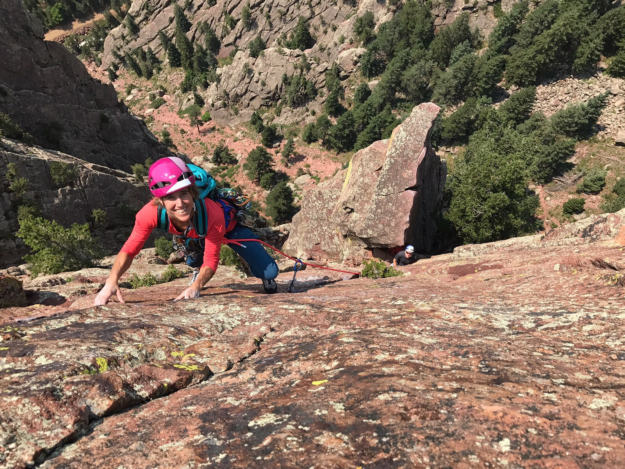
“My whole livelihood is connected to my body, which is terrifying,” Wertz said. “That would’ve been a career-ender, but [KBF] fully saved my career. I love guiding and can’t imagine doing anything else at this point in my life because it feels so powerful and rewarding. It’s mind-blowing what they did for me. I’m teary-eyed just thinking about it. I can’t believe people would be that cool. This is the kind of treatment rich people get, not a dirtbag climbing guide living in her van at fifty.”
“My favorite recipients were always the dirtbags living in their vans,” Smith laughed. “I always wondered, ‘You’re having surgery. Where are you going to recover? In your van?’”
Smith said she equally loves the stories about people getting surgery after they’ve been dealing with pain forever. She could see the weight lift and feel their relief.
“They don’t have to think about the pain anymore,” Smith said. “They were doing it for so long and didn’t realize it could get better. The injury was inhibiting their range of motion, and now they have full range of motion. It’s remarkable.”
Like Wertz, Jim Greene, a Telluride ski patroller since 1996, had been nursing an injury—a busted shoulder—for more than a decade. He had several surgeries and was told there was nothing to be done. So he learned to live with it.
“My arm just kind of withered away over those ten years,” Greene said. “When my son was two, my arm became unusable. I had to use my other arm to lift it. One day, I reached around to the backseat to do my son’s car seat belt, and that was the straw that broke the camel’s back. The remaining tendons went.”
In 2013, Greene went to the Steadman Clinic to see if anything could be done. He had insurance through his full-time position at Telluride Ski Resort, but that wouldn’t cover everything. At his first appointment, he learned about KBF. He applied, was accepted, and underwent surgery that summer.
“To have the Kees Foundation pick up where insurance left off was amazing,” Greene said. “They covered all of my deductibles and travel expenses. Several things were considered experimental in the surgery, and they covered those, too.”
Greene was back to work by the following ski season, doing his favorite thing: using explosives to mitigate avalanches. He’s also the creative mastermind behind Telluride’s iconic wooden signage marking the way around the mountain.
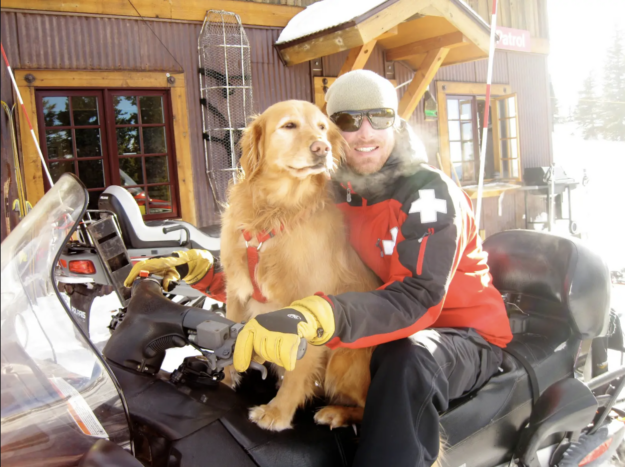
“To this day, it’s incredible,” Greene reflected. “It’s like a new arm. At that point, I couldn’t do one pull-up or push-up. I’d given up kayaking and climbing. Now I kayak, climb, and can do thirty pull-ups and fifty push-ups. The surgery and medical care from Steadman were life-changing, having such a skilled surgeon do that for me. Without that, I would’ve had to start a new career, and I can’t imagine doing anything else.”
“I have a super soft spot in my heart for people in those professions who have injuries that keep them from working,” Hackett said. “It can financially destroy you when you’re working in an industry that doesn’t have large paychecks. It’s been a real keystone of my personal career to offer these guys and gals something that keeps Kees’s spirit alive.”
While Kees’s spirit lights up the Foundation, Hans and Suzy Brenninkmeyers’ generosity fuels it.
“These two people were financially successful and had every resource at their fingertips, and yet they were totally grounded,” Hackett said. “They were extraordinarily generous people. They were so excited to hear every story about the latest grant recipient. I’d share their goals, tell them they’re doing the sickest stuff, and Hans and Suzy would be so jazzed. Hans was such a jolly person, always laughing, always smiling. He had so much charisma.”
“Hans flew under the radar,” Smith said. “He was such a vibrant person with this deep, raspy voice—one of those voices you’ll always remember. He always said, ‘Don’t let your left hand know what your right hand is doing.’”
When Hans launched KBF in 2011, he had one stipulation: the mission would be complete when Kees’s inheritance money ran out. As of July 31, 2026, the Foundation is no longer receiving applications. Over the last fifteen years, the Kees Brenninkmeyer Foundation has gifted more than $5.3 million to 179 recipients, according to Smith, who walked each recipient through their healing journey.
“Joanna was such a good fit for the Foundation,” said Kees’s sister, Julie, who also served on the KBF board. “Working with the candidates was the easy part, but my family members could never understand how she navigated the U.S. healthcare system and billing side of things like nobody’s business. And not just the local Steadman Clinic bills, but internationally. She had the patience to figure it out so brilliantly for us. That could’ve been a barrier to the KBF making an impact, or to it just fizzling out. We found the right person.”
“I hope someone picks up where this leaves off because it’s needed in the industry,” Banks mused. “We talk about it in the AMGA: how cool it would be if someone could create another fund like this. So if there’s anybody out there who would like to pick up the torch but doesn’t want to start a whole foundation, get in touch with the AMGA. We need a benefactor. You can fund it, and the AMGA will administer it.”
Anyone who knows the power of KBF’s philanthropy believes its closure leaves a massive gap, but ultimately, it’s about more than the money gifted over the years. It’s the heart of the matter: keeping alive that spirit of generosity, possibility, and stoke for the mountains.
“It’s not just like someone got their shoulder fixed or their knee replaced,” Hackett said. “At the heart of the Foundation is the spirit of a really bright light in our mountain communities. It’s kept Kees’s spirit alive, and that’s what it was all about.”
~ Joy Martin is the owner of My Legacy Work based in Durango, Colorado. She is passionate mountains own resident who spends as much time as possible exploring the San Juan Mountains and desert Southwest with the man of her dreams, Nick Martin, and their little radster, Jolene James Martin. Never short on inspiration or curiosity, Joy tries to harness her outrageous energy by avoiding technology and staying grounded with yoga, hot tub soaks, and the occasional microdose.
STORY SPONSOR
MTN Town Media Productions | Celebrating the Colorado mountain lifestyle for over 15 Years
Copyright 2026 MTN Town Media Productions all rights reserved